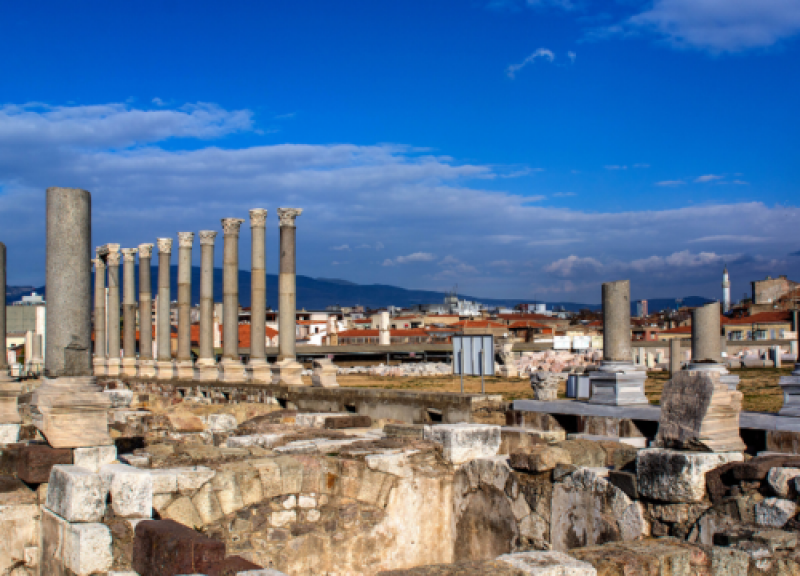
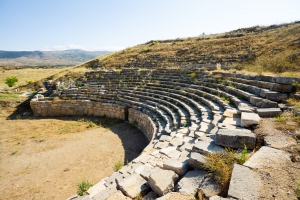
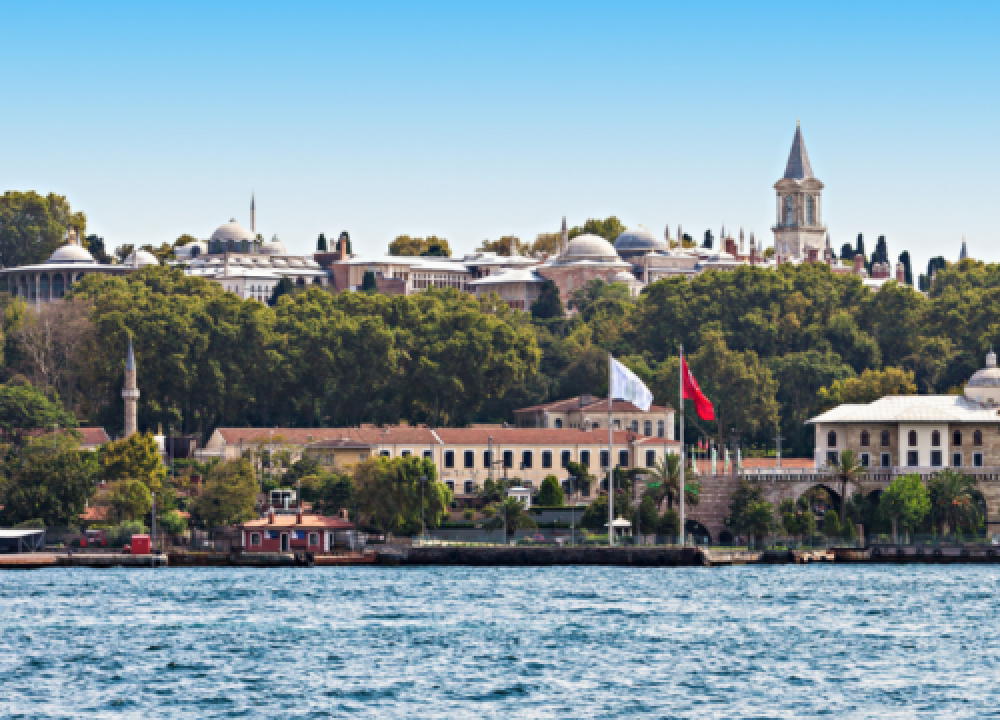
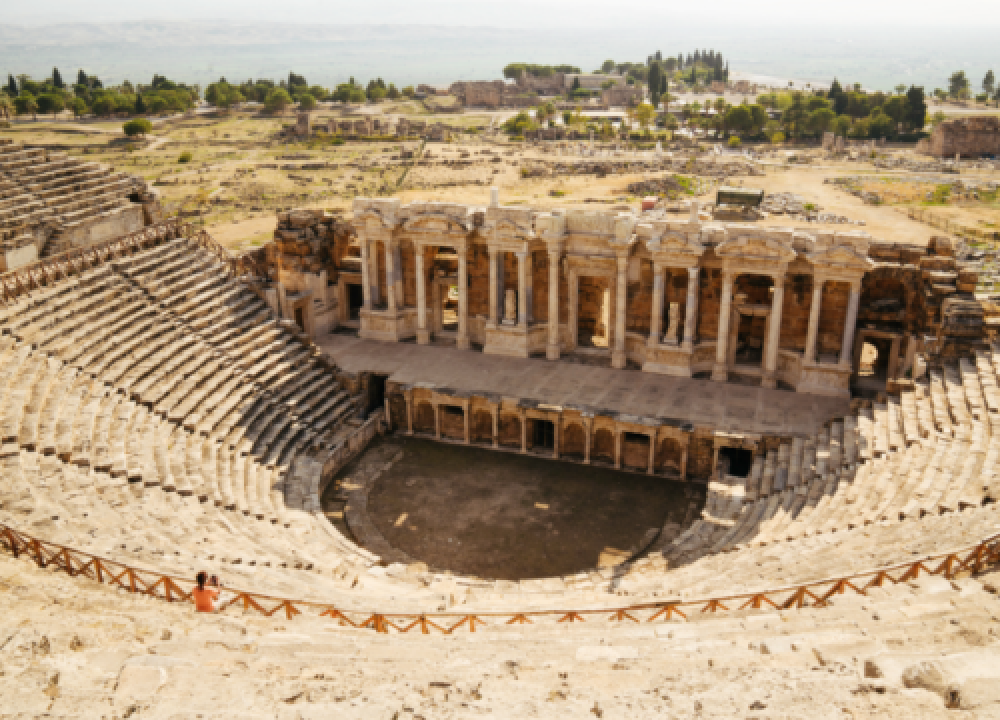
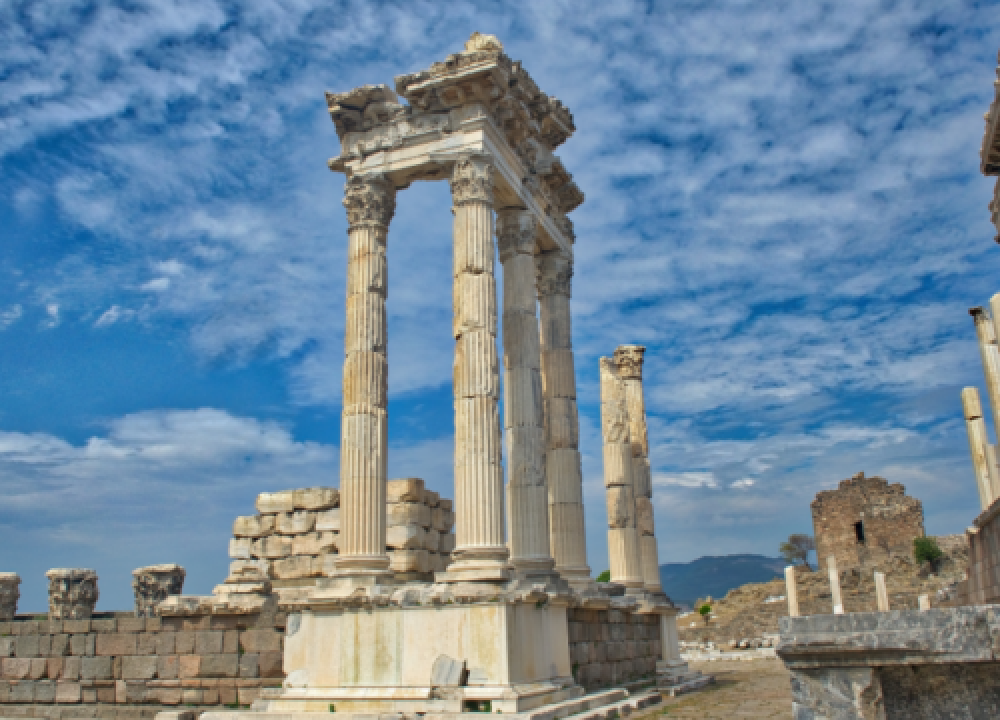
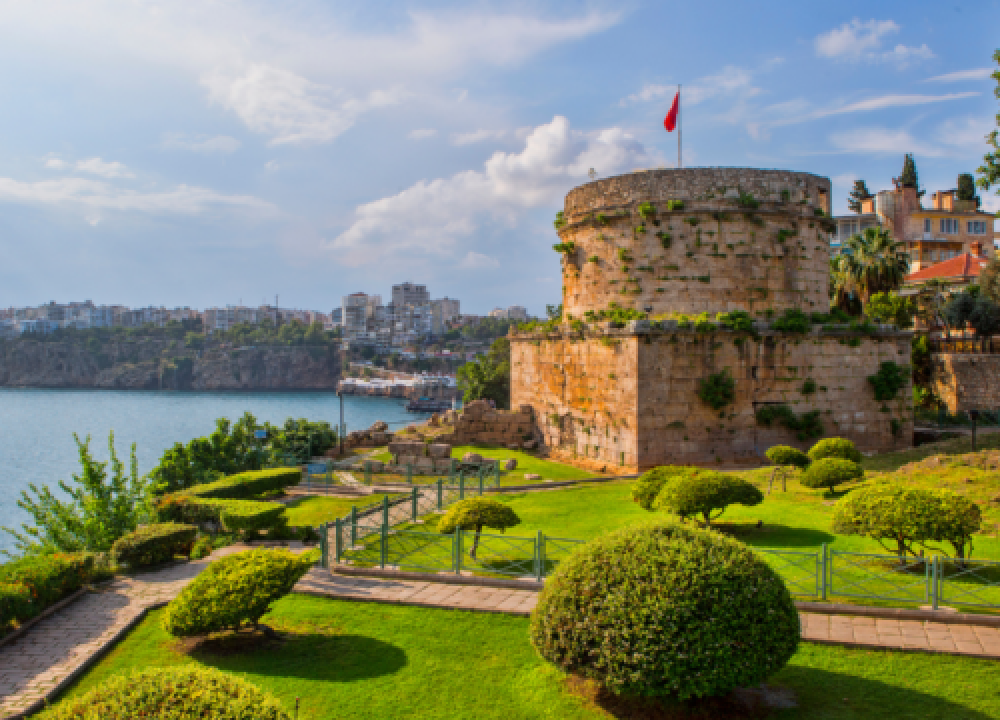
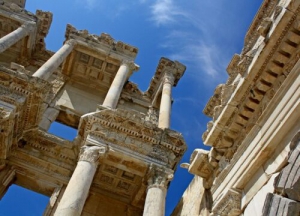
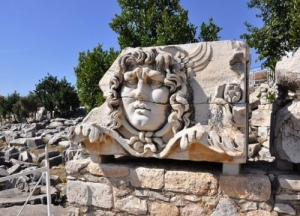
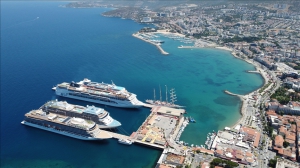
Visit the ramparts of Smyrna's Velvet Castle, built in the fourth century B.C. by Alexander the Great on Mount Pagus. (The fortress walls were said to resemble rubbed velvet.) During the first Christian century, in the stadium that once stood on the hill below Mount Pagus, Polycarp, friend of the Apostle John and pastor of the church at Smyrna, was arrested by the Roman governor and tried in a public gathering. An angry mob burned him for treason. He had refused to curse Christ and to acknowledge Caesar as his sovereign. Just before his martyrdom, Polycarp said, “Eighty six years I have served Christ and He never did me any wrong: how then can I blaspheme my King and my Saviour?” Still standing is part of the agora built by Emperor Marcus Aurelius in the third century. Today, Smyrna is the country’s major Aegean port and third largest city. Drive to Miletus, home of ancient philosopher Thales (640-546 B.C.), one of the fathers of Greek geometry, astronomy, and philosophy. It was here, in the first Christian century, that the Apostle Paul, on his third missionary journey, called for the Ephesians elders and preached a powerful message to them (Acts 20:15-38). It was also here that Paul left his friend Trophimus, who was too ill to continue (II Timothy 4:20 ). As a port at the mouth of the Meander River, Miletus was a natural outlet for Phrygian trade. Like the one at Ephesus, however, Miletuss sea harbour eventually filled with silt, and commerce dwindled. The city’s remote quietness makes it special to devout students of Scripture. Its ancient ruins include the marvelous 15,000-seat theatre. Nearby, at Didyma, visit the massive Temple to Apollo, one of the most impressive sites in Anatolia. Ordinary people did not reside in ancient Didyma. This was home only to a priestly family whose oracle came from Delphi and who lived in luxury, as they guarded their temple treasuries supplied by the people they deceived. Continue to Kusadasi for overnight.